Emiko Morita
 Email This Post
|
Email This Post
|  Print This Post
The former executive director of the Powell Street Festival Emiko Morita discusses the new book she’s edited Return to Paueru Gai: Fifty Years of Vancouver’s Powell Street Festival (Arsenal Pulp Press, 2026), with Joseph Planta.
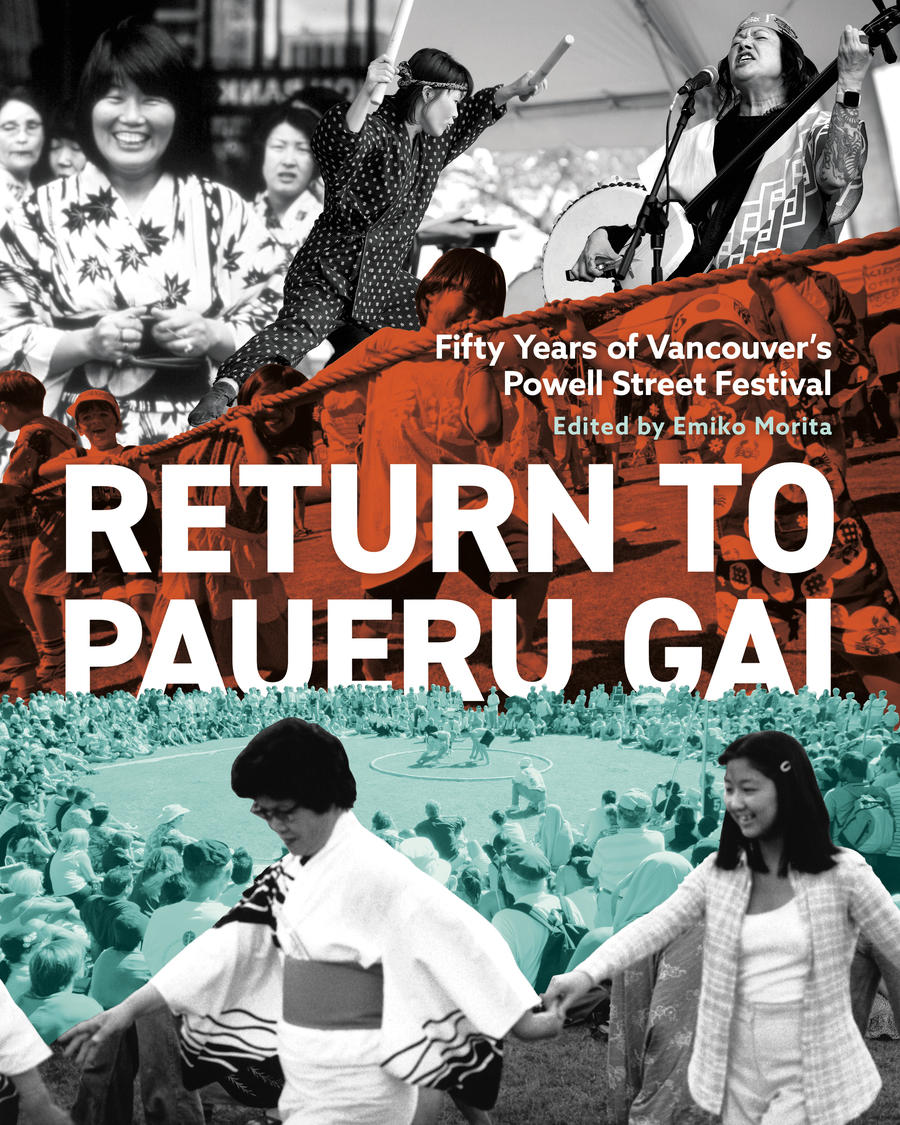 |
Return to Paueru Gai: Fifty Years of Vancouver’s Powell Street Festival edited by Emiko Morita (Arsenal Pulp Press, 2026).
Click to buy this book from Amazon.ca: Return to Paueru Gai |
Text of the introduction by Joseph Planta:
I am Planta: On the Line, in Vancouver, British Columbia, at TheCommentary.ca.
Since 1977, with only a couple of interruptions, the pandemic and a relocation elsewhere in Vancouver, the Powell Street Festival in and around Oppenheimer Park has gathered varied people each August. The festival came about to commemorate the fiftieth anniversary of the first Japanese immigrant’s arrival in Canada, though later who that person was and when was found out to be somebody else and a little later. Nevertheless, a committee of volunteers, organisers, activists and artists came together to form a committee to organise a street festival, among them was the artist and activist Tamio Wakayama, the recent subject of a documentary by Cindy Mochizuki, and an exhibit at the Vancouver Art Gallery. His art, many of the annual posters of the festival, as well his photographs, are part of a new book on the annual festival, Return to Paueru Gai: Fifty Years of Vancouver’s Powell Street Festival. The book’s editor Emiko Morita joins me now to talk about the book, and the festival that she was executive director of from 2015 to 2024. The book is a wonderful documentation of the challenges of organising a festival, as well as the sights and sounds, smells and even tastes of the two-day event. You can see dramatic photographs of dancing, sumo wrestling, drumming. As well, you’ll read about the activism and commemoration at the heart of the festival, that it has always been a community event for Japanese, but also for people of the Downtown Eastside, and beyond. It’s always been key that people living there today not be displaced for or during the festival, like the Japanese were during the internment of the Second World War. The book features essays by Musqueam Elder Mary Point, the seniors of Tonari Gumi (the Japanese Community Volunteers Association), Julia Aoki, Charlie Smith, Angela May, and members of the Japanese Canadian Art and Activism Project. The book is published by Arsenal Pulp Press. We taped this interview two weeks ago. Please welcome to the Planta: On the Line program, Emiko Morita; Ms. Morita, good morning.
Podcast: Play in new window | Download (18.5MB)
Subscribe: RSS

